Product Design
The project aims to design visually appealing and efficient cookie cutters. We strive to balance aesthetics with technical precision, offering innovative designs that meet customer needs and are commercially sustainable.
Role
Product designer
Tools
SolidWorks, Cura, Notion
The problem involves creating designs for cookie cutters that are both visually appealing and functionally efficient. This entails balancing aesthetic considerations with technical requirements such as the ability to cleanly and accurately cut dough, ease of use and cleaning, as well as scalability for manufacturing. Additionally, the diversity of shapes and sizes of cookies desired by consumers, as well as current trends and styles in the baking product market, must be considered. The goal is to develop innovative designs that meet customer needs and preferences while ensuring the technical and commercial viability of the final product.
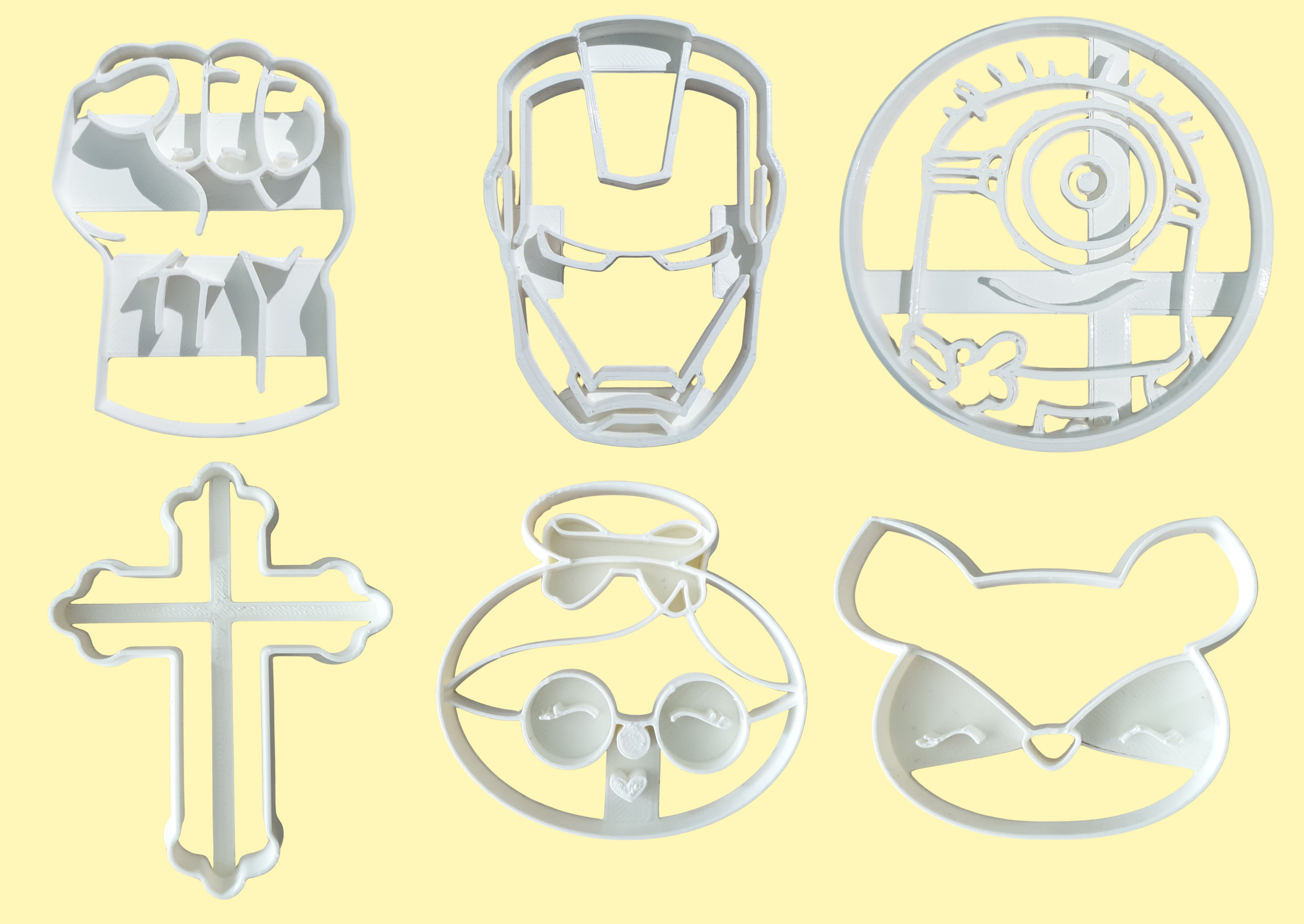
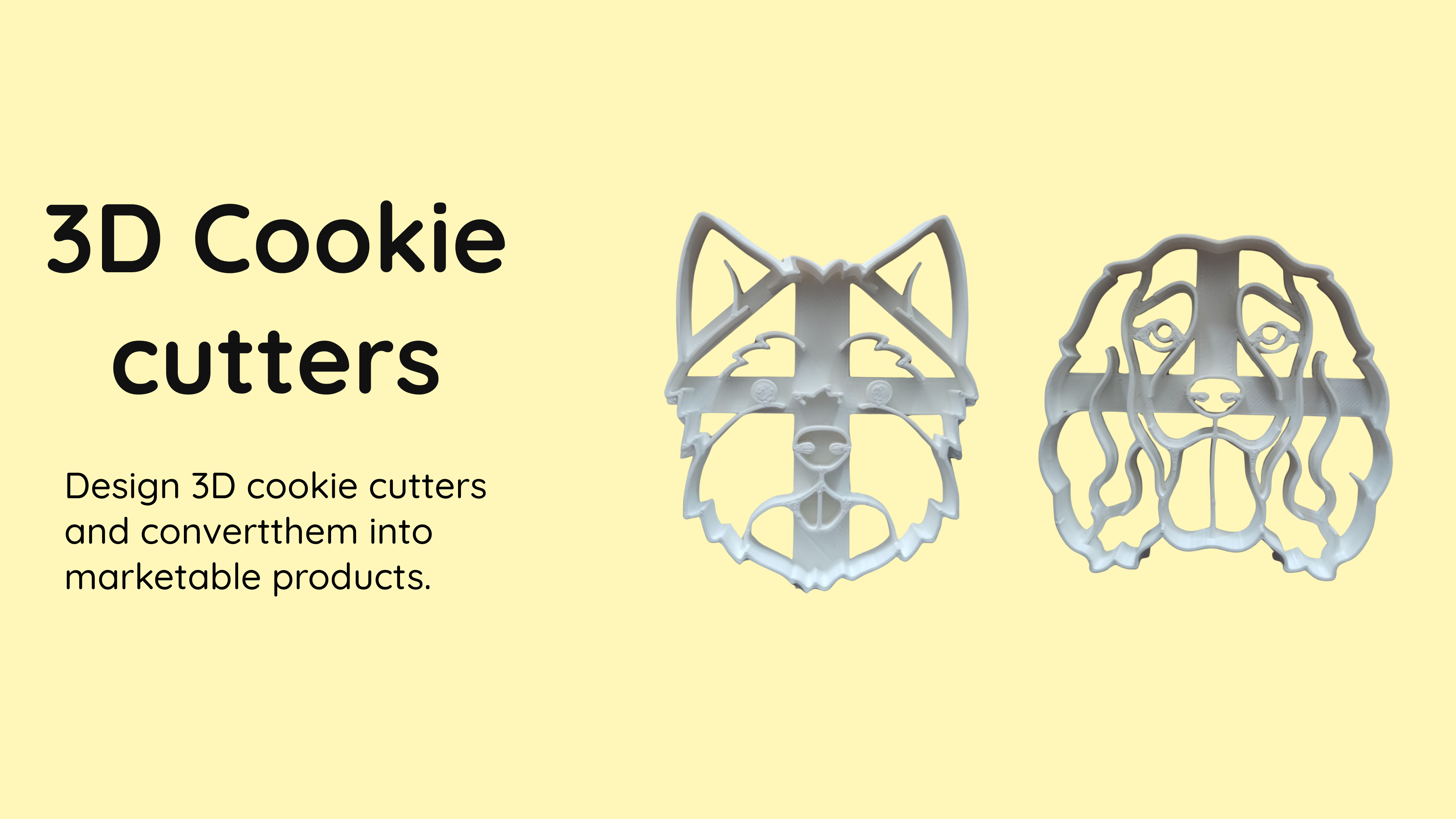
The objective of the design is to create a line of cookie and fondant cutters that are thematic, customizable, and eco-friendly. These cutters will be designed to reflect a wide range of themes, from animals and geometric shapes to iconic characters, allowing users to express their creativity and personality. Additionally, each cutter will be customizable, meaning customers will have the option to engrave names, dates, or other special messages on them. To ensure a commitment to sustainability, these cutters will be made with PLA, a bioplastic derived from renewable sources such as corn starch or sugarcane, making them an eco-friendly alternative to conventional plastics. The three proposed designs include: silhouette-shaped cutters, ideal for creating simple and clean shapes; embossed cutters, which add additional details to the cookies; and cutters that combine silhouettes with a stamp, allowing for both cutting and printing of intricate designs on the cookie dough.
For the digital design of the cookie cutters, I utilized the Solidworks software. The process began by selecting a reference image for the desired design and creating a sketch based on this image within the Solidworks environment. Then, using drawing tools such as lines and arcs, I carefully traced the contours of the image in the sketch. Once the sketch was completed, I proceeded to extrude it using the extrusion function in Solidworks. This action transformed the two-dimensional sketch into a solid three-dimensional model, thus creating the basic shape of the cookie cutter. During this process, I adjusted the dimensions and details of the design as necessary to ensure its functionality and aesthetics.
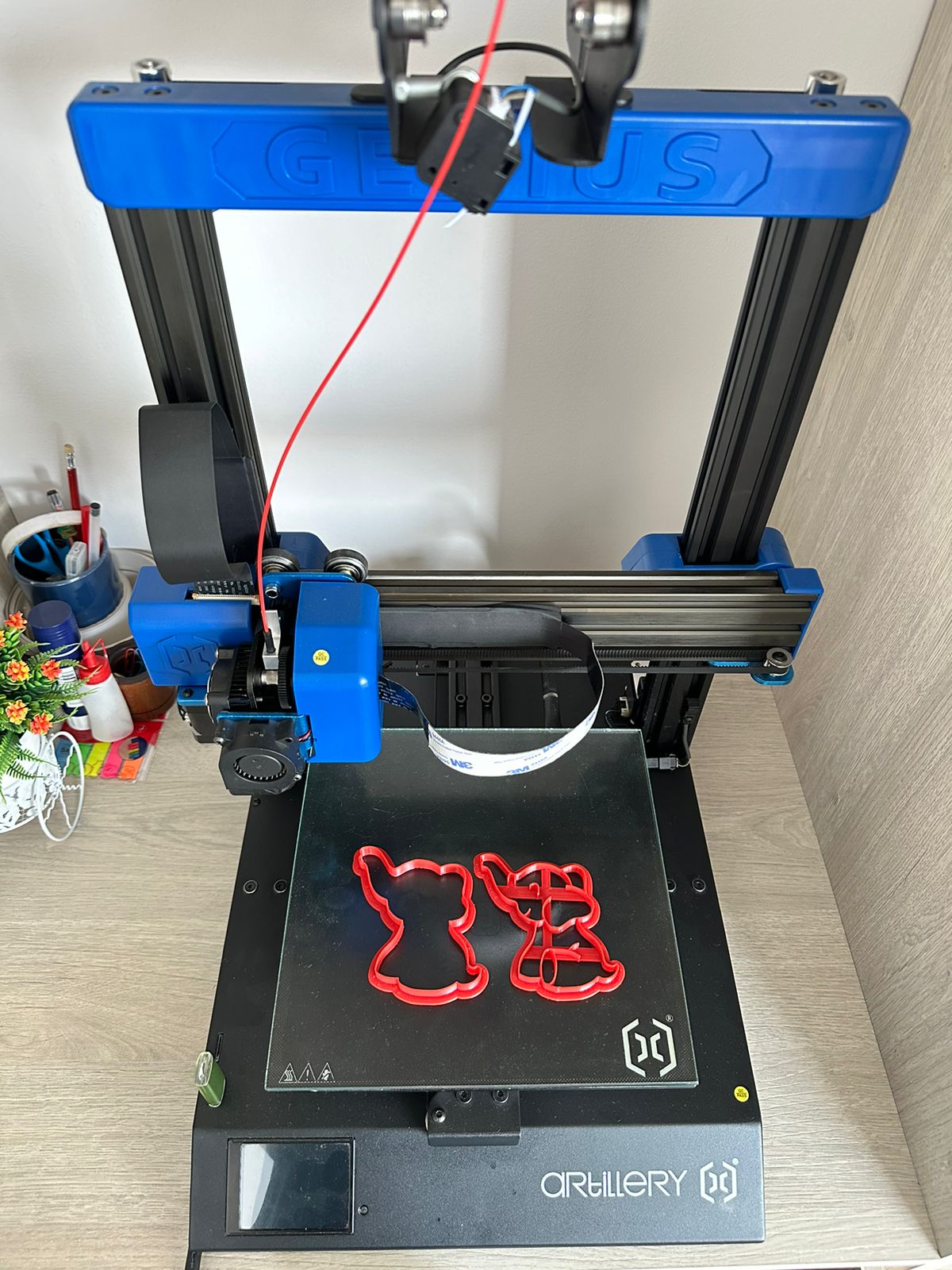
For prototyping and testing, I utilized 3D printing technology. I printed prototypes of the cookie cutters to assess their functionality, ease of use, and the quality of cutting both cookie dough and fondant. Subsequently, I subjected the prototypes to testing by making various cuts on dough and observing their performance in different scenarios. Additionally, I gathered feedback from users who tested the prototypes and used this input to make adjustments to the design based on test results. This iterative process allowed me to refine the cookie cutters to ensure they met quality standards and satisfied the needs of end users.
For the Final Design, I refined the design based on feedback obtained from testing and user input. I made necessary adjustments to enhance the functionality, aesthetics, and ease of use of the cookie cutters. Subsequently, I prepared a detailed file including design specifications and precise measurements. This file served as a comprehensive guide to the design process, ensuring that each step and detail was clearly documented to facilitate production and maintain consistency in the manufacturing of the cookie cutters.